

🌍 Solar Meets 75% of Global Demand Growth as Coal Loses Ground: A Turning Point in 2025
The global energy landscape reached a historic milestone in 2025. For the first time in over a century, renewable energy sources have overtaken coal in the global electricity mix—marking a decisive shift toward cleaner power.
According to a new report by Ember, solar energy alone accounted for 75% of the growth in global electricity demand, signaling its rapid rise as the dominant force in the energy transition.
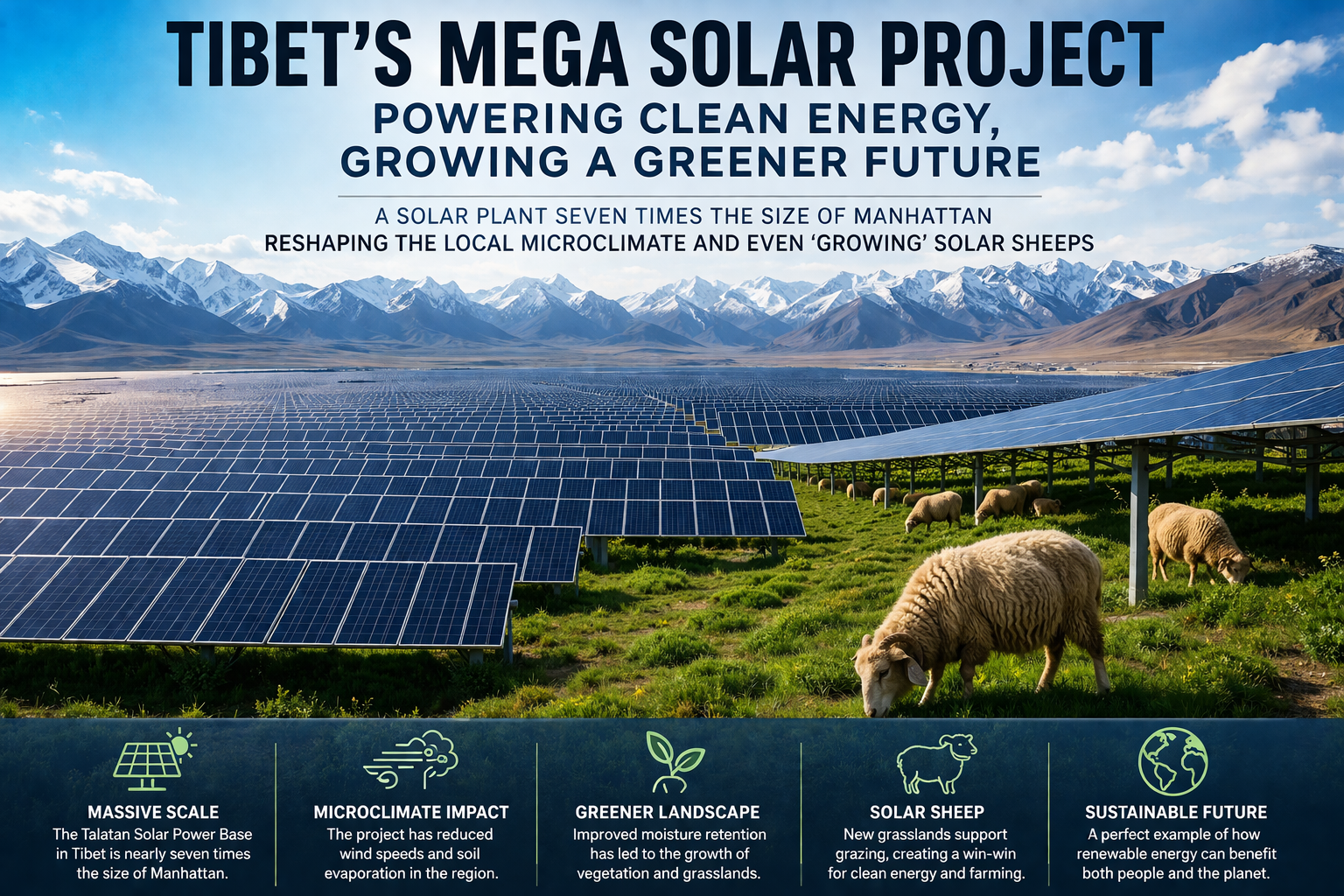
⚡ A Historic Shift: Renewables Surpass Coal
In 2025, renewables generated 10,730 TWh, making up 33.8% of global electricity, surpassing coal for the first time in 100 years.
At the same time:
- Coal generation fell by 63 TWh (-0.6%)
- Fossil fuel generation overall declined by 38 TWh (-0.2%)
- This marks the first drop since the COVID-19 slowdown in 2020
This shift is not just symbolic—it reflects a structural change in how the world produces energy.
☀️ Solar Leads the Energy Revolution
Solar energy has become the engine of global electricity growth.
- Global electricity demand increased by 849 TWh (+2.8%)
- Solar alone contributed 75% of that growth
- Solar generation surged by 636 TWh (+30%) in 2025
Major contributors include:
- China: +336 TWh
- United States: +85 TWh
- European Union: +60 TWh
This level of expansion highlights how solar is no longer an alternative—it’s becoming the backbone of new electricity supply worldwide.
🌬️ Wind Energy: The Second Growth Engine
Wind power continues to play a crucial supporting role.
- Added 205 TWh (+8.2%) in 2025
- Combined wind + solar growth: 841 TWh
- Together, they met 99% of global electricity demand growth
China again led wind expansion, followed by strong growth in India.
🇮🇳 India’s Breakthrough Moment
India emerged as a key player in the global energy transition, with 2025 marking a turning point.
🔹 Solar Overtakes Hydropower
For the first time, solar became India’s largest source of clean electricity.
- Solar output doubled from 96 TWh (2022) to 196 TWh (2025)
- Share increased to 9.4% of total electricity
🔹 Wind Growth Accelerates
- Wind generation tripled over the decade to 104 TWh
- India became the world’s 5th-largest wind power generator
🔹 Future Targets
India aims to reach:
- 500 GW non-fossil capacity by 2030
- Already crossed 250 GW renewable capacity (2025)
⚠️ The Reality Check: Coal Still Dominates in Asia
Despite global progress, coal remains deeply entrenched—especially in Asia.
- Asia accounts for 82% of global coal generation
- Coal share in Asia: 52%
- Renewables share: 32%
In India specifically:
- Coal still provides 71% of electricity
- Clean energy contributes 27%
This highlights a key challenge: growth in renewables is strong, but demand is growing just as fast.
🔄 Global Energy Transition: Key Trends from 2025
1. Solar Overtakes Hydropower
Solar is now the leading source of new clean electricity globally.
2. Renewables Cross One-Third Share
For the first time, renewables exceed 33% of global electricity generation.
3. Coal Falls Below One-Third
Coal dropped below 33% of global generation, a historic low.
4. Gas Declines in Several Countries
Countries like:
- Belarus
- United Arab Emirates
- Netherlands
…are rapidly reducing gas dependence due to renewables and nuclear expansion.
🚀 What This Means for the Future
The data from 2025 sends a clear message:
- Solar is now the fastest-growing energy source in history
- Wind and solar together are meeting nearly all new demand
- Fossil fuels are no longer driving growth
However, the transition is uneven. Regions like Asia still rely heavily on coal, meaning the global shift is in progress—not complete.
🧠 Final Thoughts
The world has reached a tipping point.
For over 100 years, coal dominated electricity generation. Now, renewables—led by solar—are taking the lead. The momentum is undeniable, but the challenge ahead is scaling clean energy fast enough to replace fossil fuels entirely.
If 2025 proved anything, it’s this:
The future of energy isn’t coming—it’s already here.