
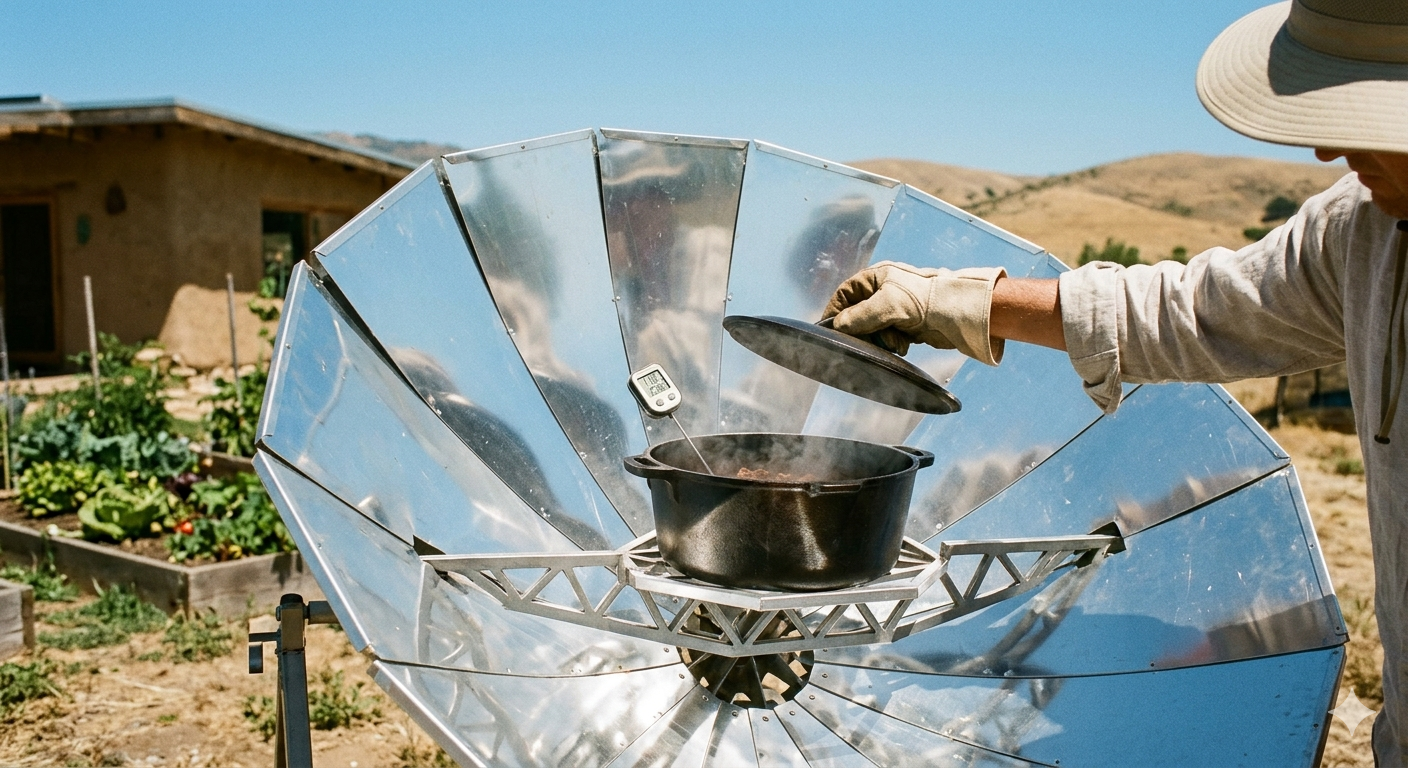
Cooking with the sun might sound like a futuristic concept, but the science behind it is as old as the sun itself. A solar cooker is a remarkably efficient device that transforms the most abundant energy source on Earth—sunlight—into heat for cooking your meals.
Whether you are camping, looking to save on energy costs, or simply curious about renewable technology, understanding how a solar cooker functions is your first step toward "sun-powered" dining.
The Main Principles
 Smart flower Solar Technology
A solar cooker operates on three fundamental principles of thermodynamics: Concentration, Absorption, and Retention.
1. Concentration (The Reflector)
The first step is gathering as much sunlight as possible. Solar cookers use reflective surfaces—typically aluminum foil, polished metal, or mirrors—to capture diffuse sunlight. These reflectors are angled to focus the light onto a specific focal point or area where your cooking vessel is placed. By concentrating the rays, the intensity of the solar energy at that point becomes significantly higher than it would be on an ordinary surface.
2. Absorption (The Vessel)
Once the light is concentrated, it needs to be converted into heat. This is where your choice of cookware matters. A black or dark-colored pot is ideal because dark colors absorb the maximum amount of light energy and convert it efficiently into thermal energy, whereas light or reflective surfaces would simply bounce the light away.
3. Retention (The Greenhouse Effect)
To reach cooking temperatures, you must keep the heat from escaping. Most solar cookers use an insulated box or a transparent cover (like glass or a heat-resistant plastic bag).
- The Greenhouse Effect: Light passes through the transparent cover and is absorbed by the pot.
- Heat Trapping: The heat energy (infrared radiation) that tries to escape the pot is trapped by the glass lid. This creates an oven-like environment, allowing temperatures to rise high enough to bake, boil, or roast food even on a cool day.
Types of Solar Cookers
Depending on your needs, there are three main designs you might encounter:
- Box Cookers: The most common type. They use a hinged lid with a reflector to direct sunlight into an insulated box. They are great for slow-cooking stews and grains.
- Panel Cookers: These use flat, reflective panels to direct light onto a cooking pot. They are lightweight, foldable, and very portable.
- Parabolic Cookers: These look like satellite dishes. They focus a high concentration of sunlight onto a very small area at the bottom of the pot. They are the "power users" of the solar cooking world, capable of frying and boiling water quickly.
Why Use a Solar Cooker?
Beyond the novelty, solar cooking offers tangible benefits:
- Zero Fuel Costs: Once you have the cooker, the fuel is completely free.
- Environmentally Friendly: You are cooking with pure, clean, renewable energy that emits no carbon.
- Preserves Nutrients: Solar cooking is a slow process that often results in more flavorful, nutrient-rich meals, similar to using a crockpot.
A Few Tips for Success
If you are planning your first solar cooking session, keep these in mind:
- Angle Matters: Make sure your reflector is positioned to catch the maximum amount of direct sunlight.
- Patience is Key: Solar cooking is generally slower than conventional methods. Plan your meals to accommodate a longer, slower cook time.
- Safety First: Even though it is "natural" energy, the pot and the interior of the cooker will become very hot. Always use oven mitts when handling your food!
Solar cooking is a beautiful reminder of our ability to live in harmony with the environment. By simply changing how we view the sunshine, we can turn a sunny afternoon into a delicious, sustainable culinary experience.